

dridhOn

Understanding KYC: The First Line of Defense Against Financial Crime

Last Updated on Feb 18, 2026, 2k Views

dridhOn dridhOn: World #1 Certification Training & Placement!

Understanding KYC: The First Line of Defense Against Financial Crime

Understanding KYC: The First Line of Defense Against Financial Crime

In today’s increasingly digital financial ecosystem, fraudsters and money launderers are becoming more sophisticated. Financial institutions and regulated businesses must adopt strong preventive measures to combat financial crime. One of the most critical safeguards is Know Your Customer (KYC) — the foundation of any effective Anti-Money Laundering (AML) program.


What is KYC?

Know Your Customer (KYC) refers to the process by which businesses verify the identity of their clients and assess potential risks of illegal intentions. It ensures that customers are who they claim to be and that their funds originate from legitimate sources.

KYC is a regulatory requirement under global and national AML laws, including:

  • Financial Action Task Force (FATF)

  • Prevention of Money Laundering Act (India)

  • Bank Secrecy Act (United States)

These frameworks mandate customer due diligence to prevent money laundering, terrorist financing, fraud, and other financial crimes.

Why is KYC the First Line of Defense?

KYC acts as a gatekeeper. Before any transaction occurs, institutions verify customer identity and evaluate risk. This helps to:

  • Prevent identity theft and impersonation

  • Detect shell companies and beneficial ownership concealment

  • Stop fraud at the onboarding stage

  • Reduce regulatory penalties

  • Protect institutional reputation

Without strong KYC controls, criminals can easily exploit financial systems to launder illicit funds.


Key Components of KYC

1. Customer Identification Program (CIP)

This involves collecting and verifying basic information such as:

  • Full legal name

  • Date of birth

  • Address

  • Government-issued identification

Verification may include document authentication, biometric verification, or database checks.

2. Customer Due Diligence (CDD)

CDD evaluates the customer’s risk profile based on:

  • Nature of business

  • Source of funds

  • Geographic location

  • Transaction patterns

High-risk customers require enhanced monitoring.

3. Enhanced Due Diligence (EDD)

For politically exposed persons (PEPs), high-risk jurisdictions, or complex ownership structures, businesses apply deeper scrutiny and ongoing monitoring.


KYC and Risk-Based Approach

Global regulators advocate a risk-based approach, particularly under guidance from the Financial Action Task Force. This means:

  • Low-risk customers → Simplified due diligence

  • Medium-risk customers → Standard due diligence

  • High-risk customers → Enhanced due diligence

This approach allows institutions to allocate compliance resources effectively.


Digital KYC & Emerging Trends

Technology has transformed KYC processes through:

  • AI-driven identity verification

  • e-KYC and remote onboarding

  • Blockchain-based identity systems

  • Continuous transaction monitoring

Regulators worldwide are encouraging digital compliance frameworks while maintaining strict security standards.


 

Consequences of Weak KYC

Failure to implement strong KYC procedures can lead to:

  • Heavy financial penalties

  • Regulatory sanctions

  • License revocation

  • Reputational damage

Several global banks have faced billion-dollar fines for inadequate AML and KYC controls.


Conclusion

KYC is not just a regulatory obligation—it is the first and most crucial line of defense against financial crime. By implementing robust identity verification, risk assessment, and ongoing monitoring processes, organizations can protect themselves and the financial system at large.

In an era of digital finance and cross-border transactions, strong KYC practices are essential for maintaining trust, compliance, and long-term business sustainability.

Career Advice!

Feel Free to Contact Us or WhatsApp Us for Career Counseling!

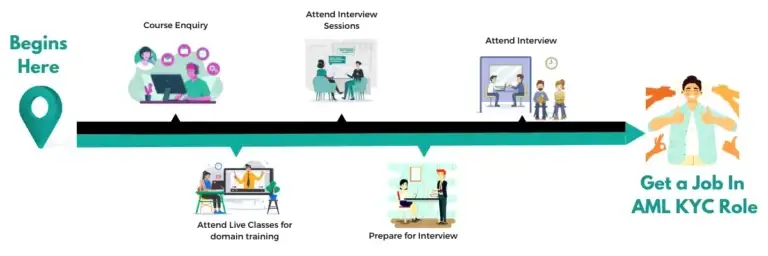
    Learning Journey